CEO
Imagine arriving at your dealership tomorrow and discovering that employees cannot access the systems they need. Sales staff cannot retrieve customer records, the finance office is unable to open important documents, and nobody knows whether the problem is an outage or a cyberattack.
Who makes the first call? Which systems should be disconnected? What can your team tell customers?
These questions reveal an important distinction in car dealership cybersecurity: owning security tools is not the same as knowing how to respond when something goes wrong.
Real preparedness means having people, procedures, and recovery arrangements ready before the first warning appears.
Firewalls, endpoint protection, and monitoring tools help reduce risk and identify suspicious activity. However, an alert cannot decide whether your dealership should suspend a system, call outside specialists, or change its operating procedures. Those decisions require a coordinated response.
A strong incident plan explains how employees report unusual activity, who investigates an alert, and when management becomes involved. It should also identify the outside contacts your dealership may need, including its insurance provider, legal counsel, and critical technology vendors.
Appropriate managed IT security services can strengthen monitoring and help address threats, but your dealership still needs an agreed process for acting on what those services detect.
Check your provider's contract to understand its response responsibilities and what happens outside regular business hours.
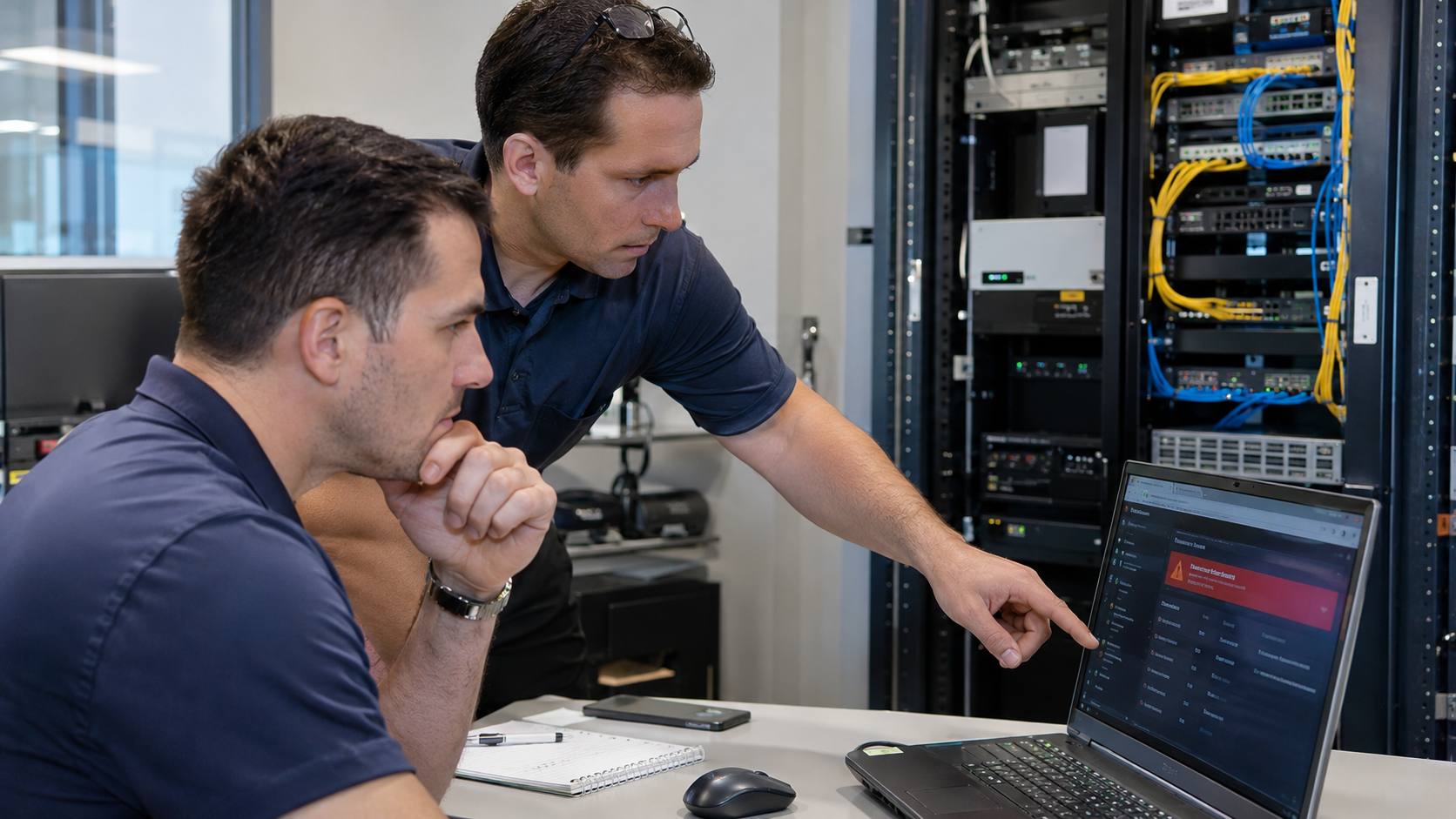
The first hour is a test of communication and decision-making. An employee might report a suspicious login, an unexpected payment request, or a computer displaying a ransomware message.
Not every warning confirms a breach, but uncertainty is no reason to leave staff guessing.
Your response procedure should give employees a few immediate instructions:
The technical response will vary with the incident. Disconnecting a device may help contain a threat, but uncoordinated shutdowns can also destroy useful evidence or interrupt unaffected systems.
Employees need clear escalation instructions, not permission to improvise.
Cybersecurity for automotive dealerships cannot rest entirely with the IT provider. Decisions about customers, employees, operations, and legal obligations belong to different people.
Assigning those responsibilities ahead of time keeps an urgent situation from becoming a debate over who is in charge.
Designate a decision-maker and a backup who can authorize operational changes, approve emergency spending, and coordinate the response.
Make sure they can be reached when the usual office systems are unavailable.
Your internal team or external provider should understand how to escalate incidents, preserve evidence, coordinate specialist assistance, and assess which systems might be affected.
Confirm these responsibilities in writing before an incident occurs.
Sales, finance, and service managers should know which temporary procedures are approved and when to stop processing sensitive information.
Their role is to protect customers and maintain essential operations without creating new security risks.
A dealership depends on several connected platforms, but they do not all have equal recovery priority. Losing a marketing dashboard for a day is different from losing access to financing records or systems that manage service appointments.
Create an inventory of critical applications, equipment, accounts, and vendors. Document who owns each system, where its information is stored, and how your dealership would function if it became unavailable.
Include your dealer management system (DMS) and the connections it maintains with other tools.
Auto dealership cybersecurity planning should account for third-party dependencies. Your provider may manage local computers without controlling the DMS vendor's servers or a cloud application's recovery process.
Establish contacts and escalation arrangements with those vendors before an emergency. For each essential workflow, identify a temporary procedure that does not expose sensitive customer information.
Technical containment is only half the challenge. Employees may hear conflicting explanations, customers may notice delays, and outside partners may want immediate answers.
Poor communication can make a difficult incident harder to manage.
Prepare an internal contact list and an alternative communication channel that does not rely entirely on the potentially affected network.
Decide who is authorized to update employees, speak with customers, contact insurers, and coordinate statements with legal counsel. Communicate verified facts without speculating about the cause or impact.
For many U.S. dealerships covered by the FTC Safeguards Rule, a written incident response plan is required. The Rule exempts covered businesses maintaining customer information on fewer than 5,000 consumers from that particular requirement, though other safeguards still apply.
Certain breaches involving the unauthorized acquisition of at least 500 consumers' unencrypted information must be reported to the FTC as soon as possible and no later than 30 days after discovery. Other notification obligations may apply, so involve qualified legal counsel when assessing the situation.
Keep a record of decisions and communications. It will help during recovery, required reporting, and the review that follows.
Once a threat has been contained, the pressure to reopen every system can be intense. Restoring files without understanding how the incident happened, however, could expose the dealership to another disruption.
Set recovery priorities before an emergency. Decide which applications must return first, how much data loss your dealership can tolerate, and how long critical workflows can reasonably remain unavailable.
These decisions should reflect your operations, not merely your IT team's technical preferences.
Review your backup and recovery solutions to confirm which systems and cloud accounts are protected. Schedule restoration tests, verify that backup copies are appropriately secured, and make sure someone can access recovery instructions if the primary network is compromised.
Recovery also includes checking that affected accounts and devices are safe to use again, reconnecting services in a controlled order, and confirming that employees can complete essential tasks.
A successful restore is only one milestone; normal operations resume when the dealership can work safely.
A written document can look complete without giving employees the confidence to use it. Put the plan through a tabletop exercise: present a realistic incident and ask everyone to describe the actions they would take.
Try a scenario in which the finance department receives a suspicious alert during a busy sales day.
Can employees reach the incident lead? Does anyone know which systems must remain offline? Who contacts the DMS vendor, and how will service advisers manage appointments in the meantime?
Record unclear answers, missing contact details, and conflicting responsibilities. Update the plan, then repeat the exercise after significant staffing or system changes.
Test recovery procedures separately so you know whether backups can support the timelines your business expects.
Preparedness is not the absence of security incidents. It is the ability to recognize trouble, respond decisively, and restore essential services with less confusion.
You cannot predict exactly how the next incident will begin. You can decide who responds, what information they need, which workflows take priority, and how your dealership will recover.
Review your current plan with management and your technology partners. If the document has never been tested, start with a realistic scenario and identify the gaps it exposes.
A coordinated response is far more valuable during an emergency than a collection of tools nobody knows how to use together.
Employees should promptly report suspicious activity through the dealership's established incident channel and follow instructions from designated responders.
Avoid deleting evidence or attempting independent repairs. The response team should assess the warning, determine appropriate containment steps, and document the timeline.
No. Antivirus and other protective tools reduce risk, but they do not replace incident reporting procedures, employee training, assigned responsibilities, and recovery testing.
Dealerships need both technical safeguards and a coordinated plan for situations in which an attack or major security incident occurs.
Many dealerships covered by the FTC Safeguards Rule must maintain a written incident response plan.
A specific exception applies to covered businesses maintaining customer information on fewer than 5,000 consumers. Even when that exception applies, a documented response process remains valuable.
Confirm your obligations with qualified counsel.
Conduct exercises periodically and revisit the plan whenever important systems, staff, or vendors change.
Annual tabletop exercises can be a useful internal target, but additional testing may be appropriate after major changes or a real incident. Test data restoration separately as well.
Contact the vendor through an established escalation channel, establish which systems and information may be affected, and follow the dealership's incident procedure.
Coordinate operational decisions with your IT team and evaluate any applicable reporting obligations. Avoid assuming the vendor handles every responsibility on your behalf.
Effective preparation connects threat detection with operational decisions and recovery procedures.
When responsibilities, temporary workflows, and restoration priorities are established early, a dealership is better positioned to limit disruption and resume essential customer services after a security incident.


