CEO

The number of connected IoT devices matters less than the fact that most can’t be patched. Businesses that ignore this reality end up carrying security risks they never planned for.
When an IoT device can't receive a security update, any flaw discovered in it stays open indefinitely—there's no patch coming, no fix scheduled, just a permanent gap an attacker can walk through. That gap can mean compliance failures, breach costs, and devices you're forced to rip out and replace long before you planned to.
Many businesses track how many connected devices they've deployed but pay far less attention to how those devices are managed once they're running. That gap in attention matters because most IoT devices were never built to receive security updates in the first place, which means vulnerabilities can linger for years with no fix in sight.
The scale of the problem is already enormous: a recent report found that connected IoT devices reached 16.6 billion by the end of 2023, and that pace of growth makes it harder by the month to keep track of what's actually secure.
Against that backdrop, understanding the real risks behind IoT security matters for any business in Chicago or beyond. The challenge was never just about accumulating more devices—it's about what happens when those devices can't be fixed once something goes wrong.

Adding more IoT devices to a network can look like straightforward progress, since each one promises some new convenience or automation. But that promise comes with a tradeoff: every device added also widens the surface attackers can probe.
The deeper issue isn't the device count at all—it's that most of these devices were never designed with ongoing security in mind. Once deployed, many simply can't be patched or updated if someone finds a vulnerability in them.
That means even one unpatchable device can sit in the network as a permanent weak spot, and as more accumulate, the risks compound rather than stay flat, making the whole environment progressively harder to defend.
It's tempting to read firewalls and antivirus tools as proof that things are under control, but that confidence has limits: none of those defenses can fix a device that was never built to be fixed.
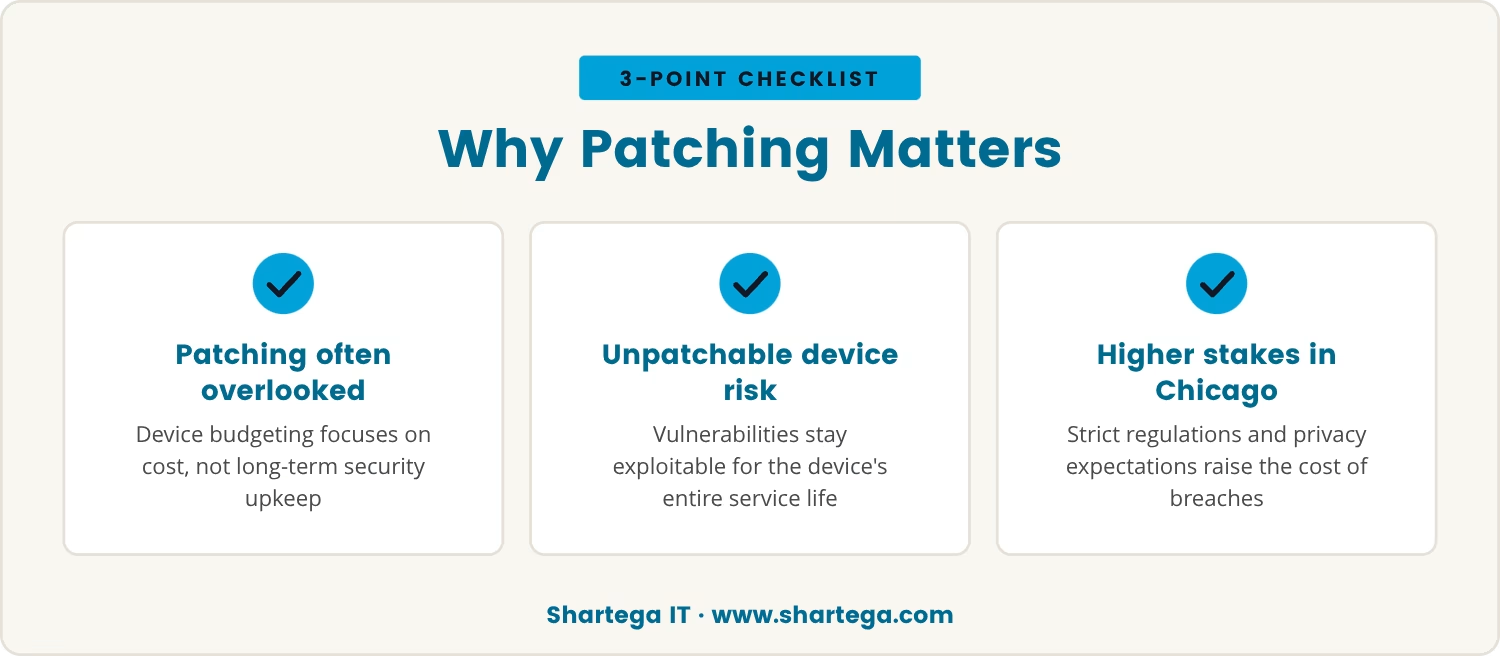
Budgeting for new IoT devices usually centers on upfront cost and expected payoff, which makes sense on paper but leaves a blind spot: skip planning for how each device gets patched or replaced, and that gap becomes a standing hole in the overall risk picture.
A device that can't be patched works like a door that can't be relocked once someone's copied the key—once a vulnerability surfaces, attackers can return to exploit it for as long as the device stays in service.
That stakes are higher still for businesses in Chicago, where regulatory expectations and customer privacy standards run high, so a compromised device exposing customer data can carry consequences well beyond the technical fix.
So before adding another device to the network, it's worth asking: is there an actual process for keeping it secure for as long as it stays in use?
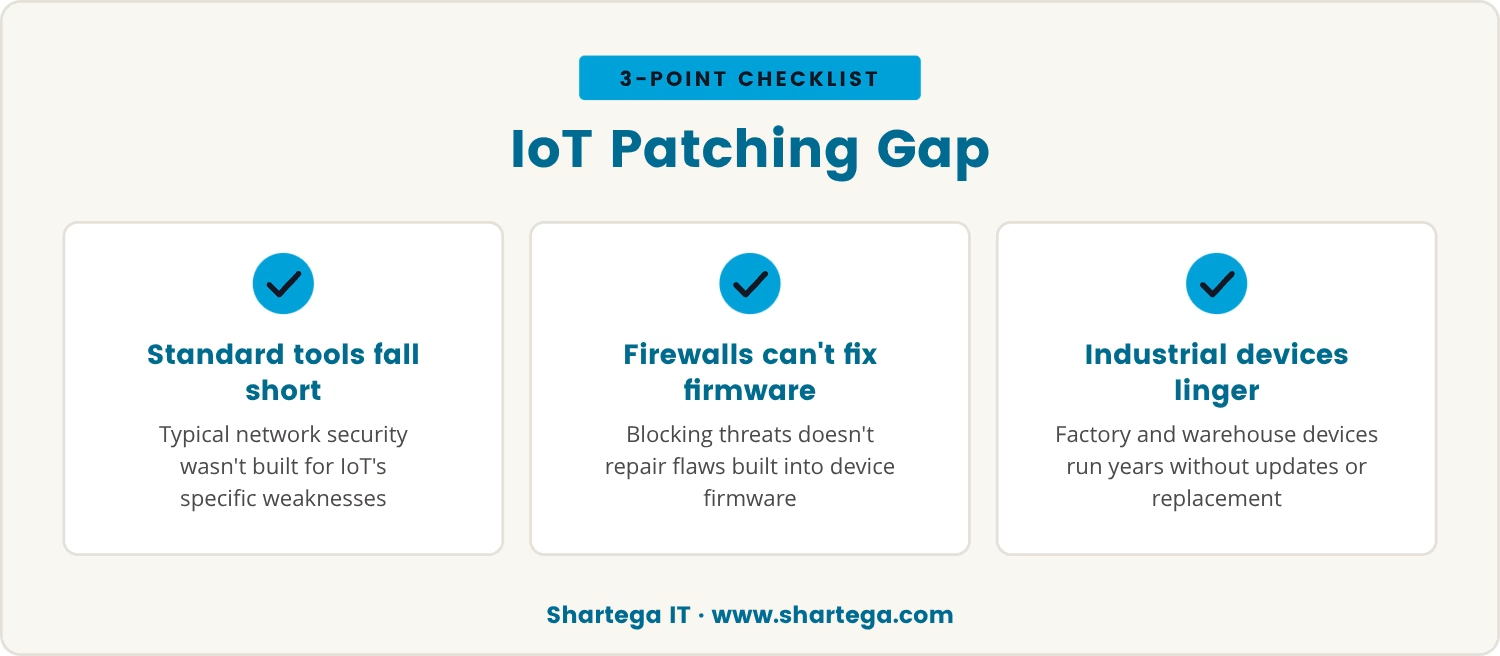
It's common for organizations to assume standard network security measures will cover their IoT environment, but those measures were built for a different problem and often miss what makes IoT devices uniquely hard to secure.
A firewall can block plenty of incoming threats, yet it can't rewrite a flaw sitting inside a device's firmware. Encryption protects data in transit, but it does nothing to close a hole in software that was never updated.
Industrial IoT security and IIoT security run into the same wall. Devices on factory floors or in warehouses often run for years untouched, and pulling them for replacement can be expensive enough, or disruptive enough, that it keeps getting deferred.
What results is a patching gap: a standing zone where vulnerabilities persist simply because the devices were never designed to be fixed, and that gap is exactly where attackers go looking for easy entry.
Some of the sharpest risks from unpatchable IoT devices aren't obvious until they've already caused damage. Here's how those risks tend to play out:
When a device can't be patched, any flaw found in it stays open to attackers indefinitely. That turns a single weakness into a lasting entry point into the network.
Regulations typically require addressing known vulnerabilities directly. Devices that can't be updated make that requirement difficult to satisfy.
Each unpatchable device adds another route an attacker might use to get in. As the device count grows, so does that exposure.
Once a device is confirmed insecure, full replacement is often the only real option left. That can prove both expensive and disruptive to operations.
A breach traced back to an unpatchable device can damage standing with customers and partners, particularly when sensitive data is involved.
Avoiding unpatchable devices entirely usually isn't realistic, but the risk they carry can still be reduced through deliberate action. Consider the following steps:
For businesses in Chicago, the stakes run especially high, since local regulations paired with customer expectations make deliberate management of IoT security close to non-negotiable.
A secure IoT environment isn't just a matter of buying the right devices up front. It depends on having a clear, ongoing process for monitoring, updating, and eventually replacing whatever can't be patched.
Partners who already understand these risks can make that process easier to execute. They can help with choosing devices that support real updates and with building a roadmap for handling the ones that don't.
Ultimately, the goal is making sure the technology serves the business without quietly introducing risks nobody planned for.
Focusing on device growth while skipping the planning for patching means accepting risks that never show up in the initial budget. Those risks surface later instead, as compliance failures, data breaches, and costs nobody saw coming.
The devices added today can turn into tomorrow's vulnerabilities without a plan to secure them across their working life. Thinking ahead about patching and replacement isn't a nice-to-have—it's a core piece of long-term business health.

Many businesses with 20 to 300 users, especially auto dealerships and others with 30 or more, find themselves adding IoT devices without a clear patching plan. At Shartega IT, we know how easy it is to overlook the long-term risks when you’re focused on growth.
If you’re unsure how to manage device security over time, let’s talk about how we approach patching and replacement strategies that fit your business.
Sign up with Shartega and your first 2 months are free—giving you a head start on securing your devices without extra upfront cost.
Check the documentation for each device to see whether the manufacturer provides security updates or firmware patches. If no updates are offered or there's no clear update process, the device is likely unpatchable. A detailed inventory makes it far easier to track which devices carry that risk.
Isolate these devices on their own network segment, restrict their access to only what's necessary, and monitor their activity for unusual behavior. Review the inventory regularly and plan for replacement once the security risk becomes too high to justify keeping the device.
Network segmentation splits infrastructure into smaller, controlled sections. Placing IoT devices on their own segment limits the damage a compromised device can cause and makes suspicious activity easier to spot.
Compliance standards generally require addressing known vulnerabilities and protecting sensitive data. When IoT devices can't be patched, meeting that standard may mean documenting mitigation steps taken or replacing the devices outright.
Yes. Automation tools can monitor device health, flag threats, and keep inventory management efficient. Automation can't patch a device that's unpatchable, but it can surface risks quickly and speed up the response.


