CEO
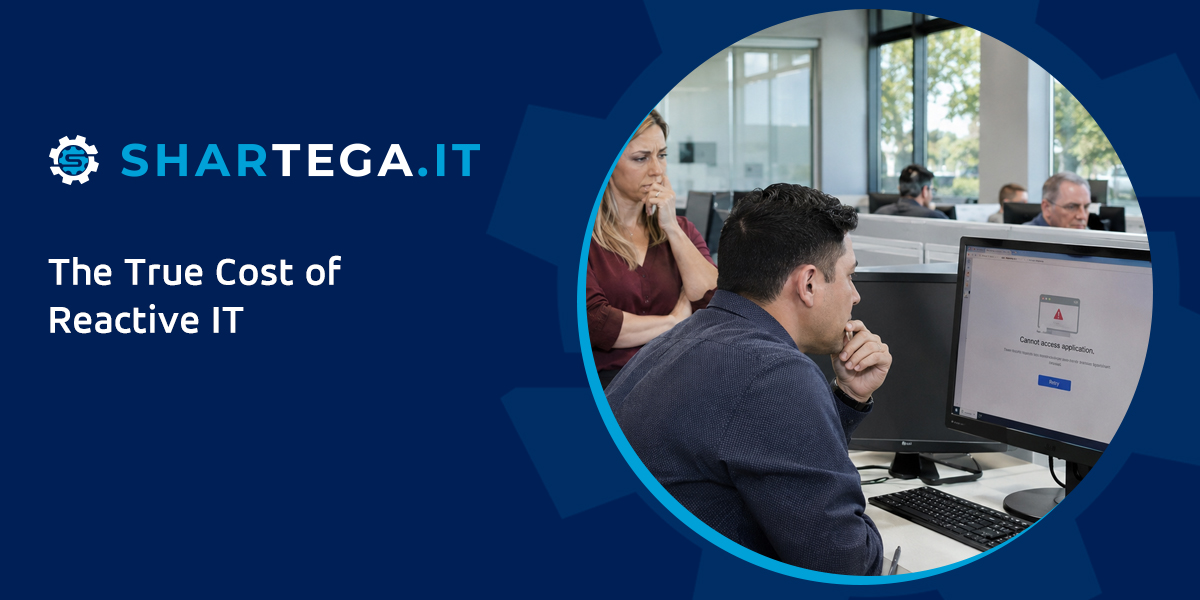
A printer fails just as the sales team prepares paperwork. Later that week, a service adviser loses access to a shared application. Someone calls for help, the immediate problem gets fixed, and everyone moves on. Until it happens again.
This cycle can seem manageable because each incident is relatively small. But reactive IT support creates costs that rarely appear together on one invoice. Employees lose working time, managers become informal troubleshooters, and urgent repairs compete with money intended for other priorities. For dealerships operating on tight schedules, those interruptions can affect the entire customer experience.
Understanding the true cost means looking beyond what you pay a technician and examining what repeated problems do to your business.
Reactive IT means responding once something stops working or an employee reports an issue. It is necessary when unexpected problems occur, but relying on it as your main support strategy can leave the underlying causes untouched.
Imagine an unreliable connection at the service counter. A technician restores access, but nobody investigates why the connection keeps dropping. The next failure generates another call, another delay, and another interruption to employees who have already adjusted their work around the problem.
A single repair may be reasonable. Paying repeatedly to address the same symptom is a different decision.
Look at patterns in your support history: recurring network issues, repeated application freezes, or devices that need constant attention. Those patterns suggest it may be time to address the cause instead of approving another temporary fix.
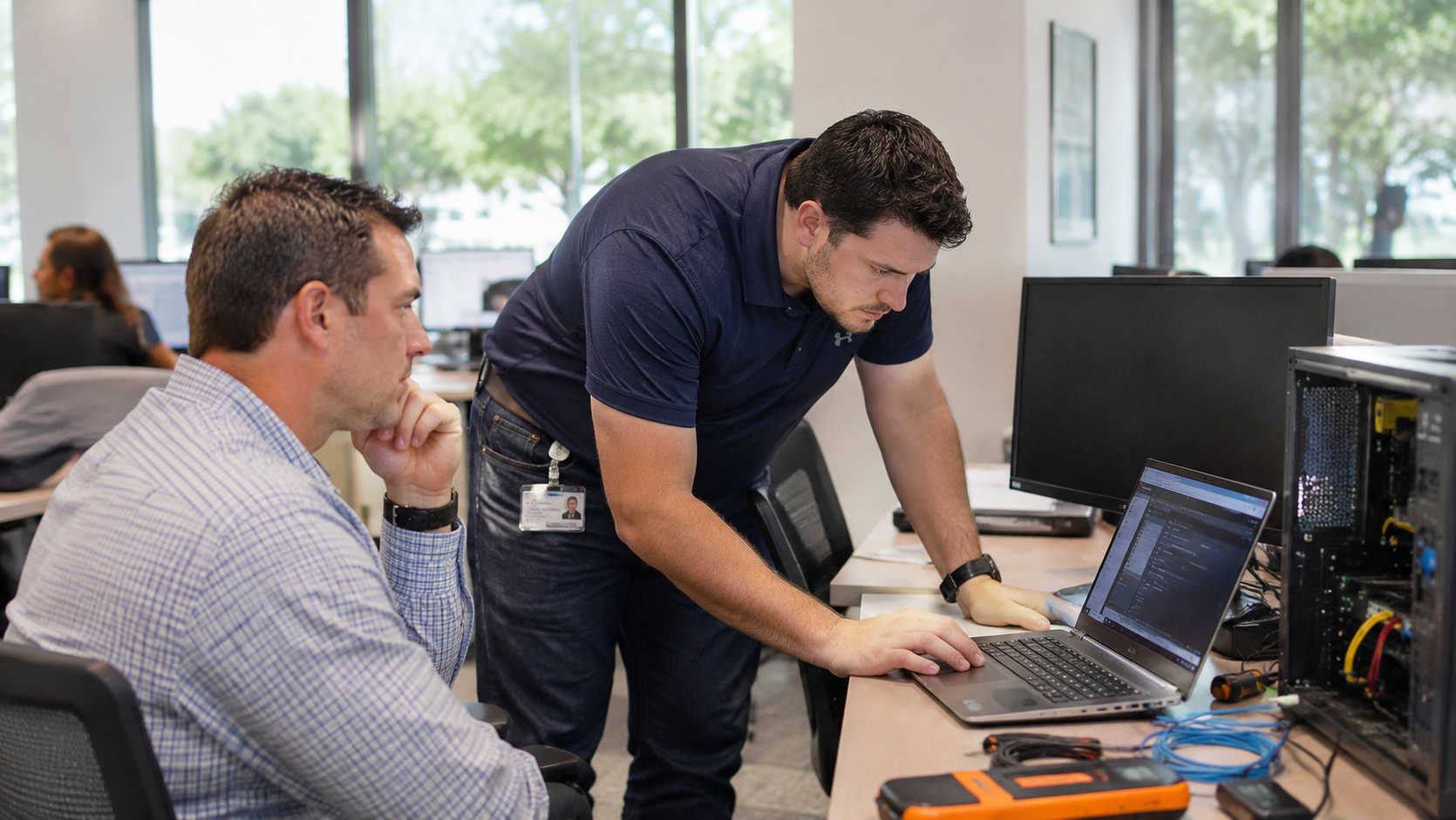
Dealership work moves between departments. A connection problem affecting one shared application may prevent sales employees from accessing records and service advisers from completing paperwork. A stalled workstation may cause employees to queue for another device.
The disruption continues even when the repair itself takes only a few minutes. Staff need to reconnect, reopen applications, recover unfinished work, and catch up with customers. If an interruption happens during a busy period, rescheduled tasks can create delays later in the day.
Record not only when an incident starts and ends but also who could not perform normal duties. This reveals whether a seemingly minor technical problem is consuming several hours of combined employee time.
Some interruptions can be worked around, and not every delayed task represents lost revenue. The important point is to understand how often preventable issues interfere with productive work.
Repeated technical problems change how employees work. A salesperson who expects the customer database to freeze may delay updating notes. Service staff may keep duplicate information outside their normal systems because they are unsure whether an application will stay available.
Those workarounds can lead to inconsistent records and extra steps for coworkers. Employees may also stop reporting problems when they believe nothing will change, leaving managers without a complete picture of the disruption.
Ask teams which technical issues they have learned to tolerate. A short conversation can expose problems that rarely appear on support invoices. Combine that feedback with ticket records to identify the frustrations that affect the most people.
Reliable technology will not solve every workplace issue, but removing recurring obstacles gives employees more time and attention for their actual responsibilities.
When an important system fails, a manager often becomes the point of contact between employees, vendors, and technical support. They may approve emergency spending, reorganize schedules, explain delays to customers, and check whether the repair actually worked.
That time has a cost even if the manager never submits an IT ticket. It also takes attention away from staffing, customer issues, and operational improvements.
Consider keeping a simple incident log for one month. Include the people involved, the time spent coordinating a resolution, and any follow-up work required afterward.
If management keeps handling the same technical problem, its total cost is greater than the repair charge suggests.
Reactive IT support costs often rise when a dealership has limited information about equipment condition. An aging server may require emergency parts, an outdated workstation may need sudden replacement, or a repeated issue may lead to an expensive after-hours visit.
Urgent purchases can also reduce your ability to compare options. When a critical system is unavailable, there may be little time to evaluate equipment, schedule installation, or negotiate project costs.
A routine equipment inventory and replacement schedule can help identify these expenses earlier.
Similarly, proactive maintenance can include regular checks of equipment and system health so emerging problems receive attention before they disrupt daily work.
Prevention cannot eliminate all emergencies. It can, however, give your dealership more opportunities to make planned decisions instead of purchases under pressure.
To see the combined effect, use a realistic monthly example.
Suppose your dealership experiences four avoidable incidents, and each incident affects four employees for 45 minutes. Assume those employees have an illustrative loaded labor cost of $32 an hour, and a manager spends one additional hour per incident coordinating the response at $55 an hour.
Now suppose each issue also requires two hours of external technical assistance at $150 an hour.
Your estimate would look like this:
Combined, that's $1,804 in one month, or $21,648 over 12 months if the same pattern continues.
All figures are hypothetical, and the example assumes management hours are additional to the employee hours counted.
Employee time affected is not automatically a cash loss; some work may be completed later. The calculation also excludes overtime, emergency equipment, delayed appointments, or potential lost business.
Its purpose is to give you a clearer baseline for comparing repeated incidents with the cost of preventing them.
Once you know which problems consume the most time, investigate why they recur.
A workstation that repeatedly freezes may need more than another restart. Frequent connection failures may point to aging equipment, an unreliable configuration, or a problem involving a third-party application.
Ask your support provider to document recurring incidents and explain the corrective action taken. Then verify whether the problem actually stops happening.
Closing a ticket quickly is useful, but it tells only part of the story if another ticket appears a week later.
Prioritize issues based on the number of employees affected and how severely they disrupt operations. Solving one persistent problem that slows an entire department may be more valuable than addressing several minor inconveniences.
Pay-per-incident support may still suit a dealership with straightforward systems and infrequent technical problems. But when repairs become routine, costs are unpredictable, or management spends too much time arranging fixes, it is worth comparing alternatives.
A structured managed IT services agreement may offer ongoing monitoring, maintenance, and help desk support under a defined scope.
Review exactly what is included, how urgent issues are handled, and which projects or onsite visits may cost extra.
Compare that total commitment with your actual repair bills and the disruption you recorded. Include the cost of the transition and remember that a managed agreement does not guarantee zero downtime.
The objective is fewer recurring problems, clearer accountability, and less uncertainty around essential technology.
The biggest problem with reactive IT is not necessarily one expensive outage. It is the steady drain created when the same disruptions consume employee time, management attention, and unplanned funds month after month.
Start by measuring recurring issues, then focus on the problems causing the most operational friction.
A more deliberate support strategy can give your dealership greater control over its technology and more time to serve customers.
Reactive IT support addresses technical issues after employees notice a problem or a system stops working.
It includes necessary emergency troubleshooting, but relying entirely on this model may allow recurring issues to continue without preventive maintenance or long-term planning.
Repair charges are only one part of the expense. Employee downtime, management coordination, emergency purchases, and repeated service calls can increase the overall cost, especially when the underlying cause is never resolved.
Every dealership benefits from identifying and addressing preventable problems, but the appropriate arrangement depends on its size, systems, and internal expertise.
Regular maintenance may be handled internally, externally, or through a combination of both.
Keep a log of incidents, repair charges, affected employees, downtime, and management follow-up.
Review the records monthly to identify repeat problems and estimate how much they disrupt operations.
No provider can guarantee that every failure will be prevented.
Ongoing monitoring and maintenance can help identify certain problems earlier, while a clear support process can improve how quickly your dealership responds when an incident occurs.
Consider a change when repeated issues interrupt essential work, repair expenses become difficult to predict, or employees regularly depend on temporary fixes.
Compare your documented costs and service needs with the full terms of a more structured agreement.


